17 April 2022
Marking the International Day of Monuments and Sites, which explores the theme of “Climate Change” this year, the Bahrain Culture Authority asserts that the Bahraini archaeological heritage is also vulnerable to worldwide climate change
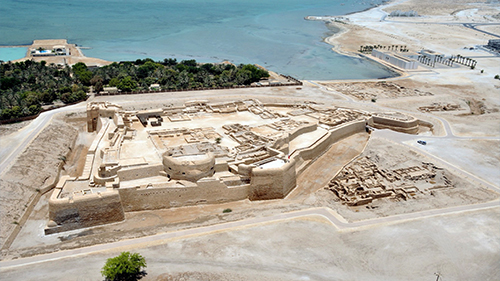
World Heritage Day is observed every year to spread awareness about the importance of Heritage and to promote ways to protect and preserved it. In this regard, the Bahrain Authority for Culture and Antiquities confirmed that the cultural and natural heritage of the Kingdom of Bahrain is also pertinent and concerned with any devastating effects of climate change worldwide, especially building materials for ancient ruins. The rise in temperature, humidity, wind speed, rain precipitation rate, and the possible rise in sea level, all of this could affect the state of preservation and safeguard of the components of archaeological sites, historical buildings and historical agricultural areas.
Dr. Salman Al-Mahari pointed out that any rise in sea level in the future could submerge archaeological sites near the sea, such as the coastal fortress at Qala'at al-Bahrain and Abu-Maher Fort, both of which are located directly near the seacoast, as well as coastal ruins in the Hawar Islands.
In addition, Al-Mahari explained that climatic changes in the world have a negative impact on the world's cultural heritage. In 2005, a group of concerned organizations and individuals brought to the attention of the World Heritage Committee the issue of the effects of climate change on the natural and cultural properties of World Heritage. Since then, the issue of the impact of climate change on cultural heritage has received remarkable attention from the international community, as it has become one of the challenges facing cultural heritage. Accordingly, ICOMOS (International Council on Monuments and Sites) also held several meetings and workshops, including the one that was held in Pretoria - South Africa in 2007, which issued recommendations related to the impact of climate on cultural heritage.
Indeed, Climate change poses a severe threat to many cultural heritage sites. Threats include floods, increasing extreme weather events, desertification, deterioration of permafrost, and the decay of cultural landscapes. Protecting cultural heritage sites proves to be very difficult as they are very diverse. In fact, climate change is one of the biggest threats facing cultural heritage today, as World Heritage properties in every part of the world suffer from the effects of climate change, both from increasing fires to floods, droughts, desertification, melting ice and rising sea levels, as well as the increased frequency of extreme weather events. Societal extermination due to climate change threatens entire ways of life, including the practice and transmission of living heritage, oral traditions, performing arts, social practices, ceremonial events and traditional knowledge, all of which are vulnerable in the face of climate change. In short, climate change is disrupting the lives of communities around the world, greatly limiting their ability to access and benefit from their culture.
It is worth mentioning that in 1982, the International Council on Monuments and Sites designated April 18 as the International Day for Archaeological Sites and Monuments, and UNESCO approved it in 1983. Each year, on this occasion, ICOMOS proposes a theme for activities to be organized by its members, ICOMOS National and International Scientific Committees, Working Groups and partners, and anyone who wants to join in marking the Day. The selected theme of “Heritage and Climate” offers the opportunity to respond to questions such as how to employ climate justice and equity to protect heritage and the ways in which we may achieve equitable protection of vulnerable communities through climate action while responding to the UN Decade of Action. This can done by developing research and scientific methods that can achieve sustainable development that contribute to preserving cultural heritage from the negative effects of climate change.